 tuneit
Guitar essentials
Standard vs. Drop D tuning
What changes, what stays the same, and how to move between two useful six-string guitar tunings.

D–G–D–G–B–D Free on this page. Allow the mic and play a string.
 Get the free appScan to download on your phone
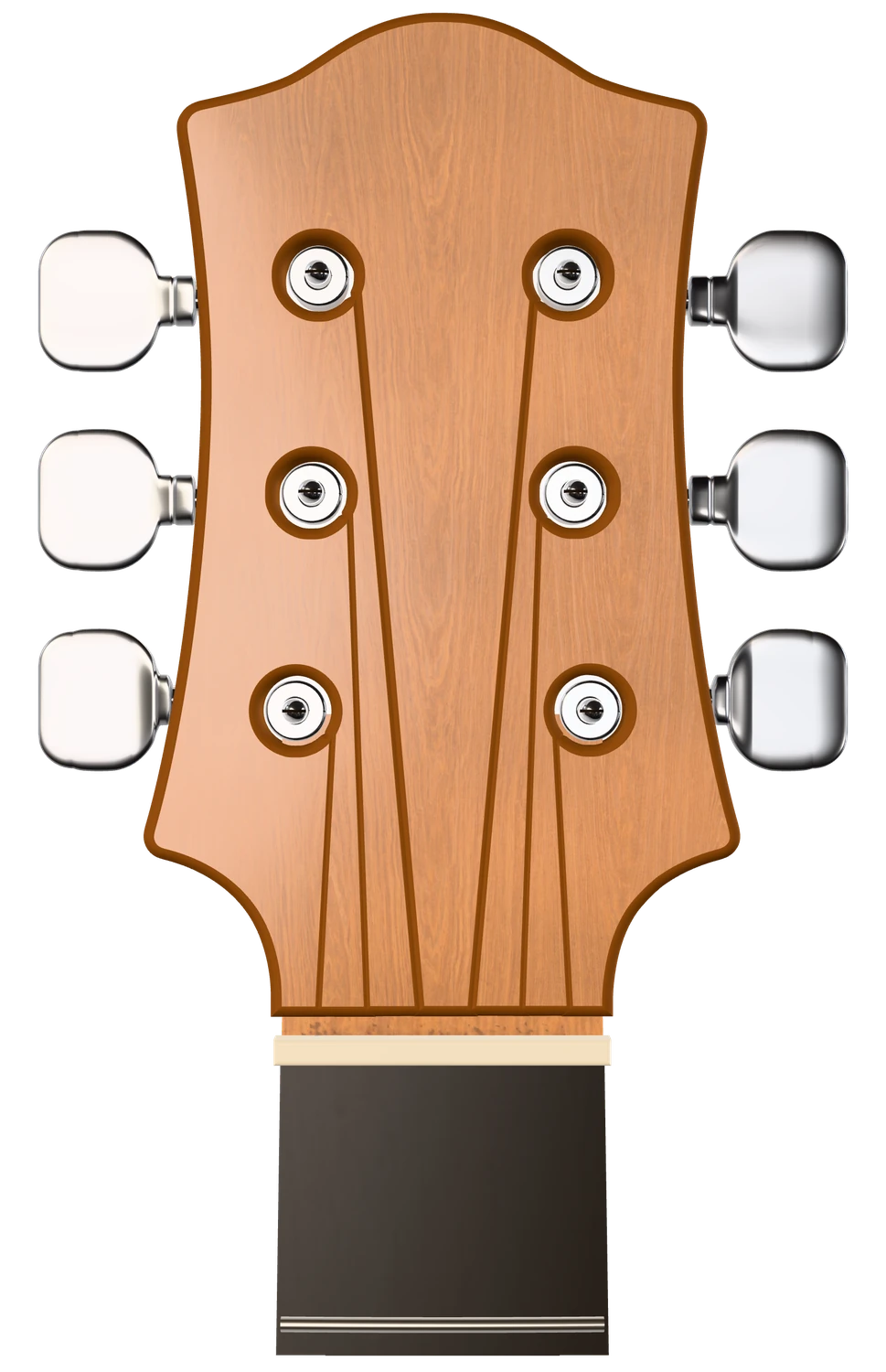







D2
The full tuner lives on your phone
Open G tunes the guitar to a G major chord. Three strings come down a whole step, the 6th, 5th and 1st, and the other three stay where they are.
| String | Note | Frequency | From standard |
|---|---|---|---|
| String 6 · thickest | D2 | 73.42 Hz | Down a whole step, from E |
| String 5 | G2 | 98.00 Hz | Down a whole step, from A |
| String 4 | D3 | 146.83 Hz | Same |
| String 3 | G3 | 196.00 Hz | Same |
| String 2 | B3 | 246.94 Hz | Same |
| String 1 · thinnest | D4 | 293.66 Hz | Down a whole step, from E |
Lowest string first, at A4 = 440 Hz. Highlighted strings differ from standard E–A–D–G–B–E.
From standard E–A–D–G–B–E. Turn in small steps and let each note ring before you read it.
Strum the open strings and hear a G major chord: D–G–D–G–B–D.
Slide guitar and blues. The open strings already make a chord, so a slide laid across any fret plays a major chord there.
Keith Richards’ rhythm parts with the Rolling Stones. He plays Open G on a five-string guitar with the low string taken off, on songs like “Brown Sugar” and “Start Me Up”.
One-finger chords. Barre all the strings at the 5th fret for C and the 7th for D, the three main chords in the key of G.
Both tune the guitar to a major chord. Open G puts the root, G, on the 5th string with a D below it; Open D puts the root on the 6th string.
No. Just leave the 6th string unplayed. It’s the low D, the string he removes.
Yes, it’s one of the two most common slide tunings, with Open D. Barring the slide straight across any fret gives a major chord.
Yes. Open G has its own page so you can tune to it free, with no sign-in. Switching between every tuning in one place, and the cents reading, come with Guitar Premium, the same Premium as the app.
Guitar TunerFree on iPhone and AndroidGet the app