 tuneit
Guitar essentials
Standard vs. Drop D tuning
What changes, what stays the same, and how to move between two useful six-string guitar tunings.

D–G–C–F–A–D Free on this page. Allow the mic and play a string.
 Get the free appScan to download on your phone
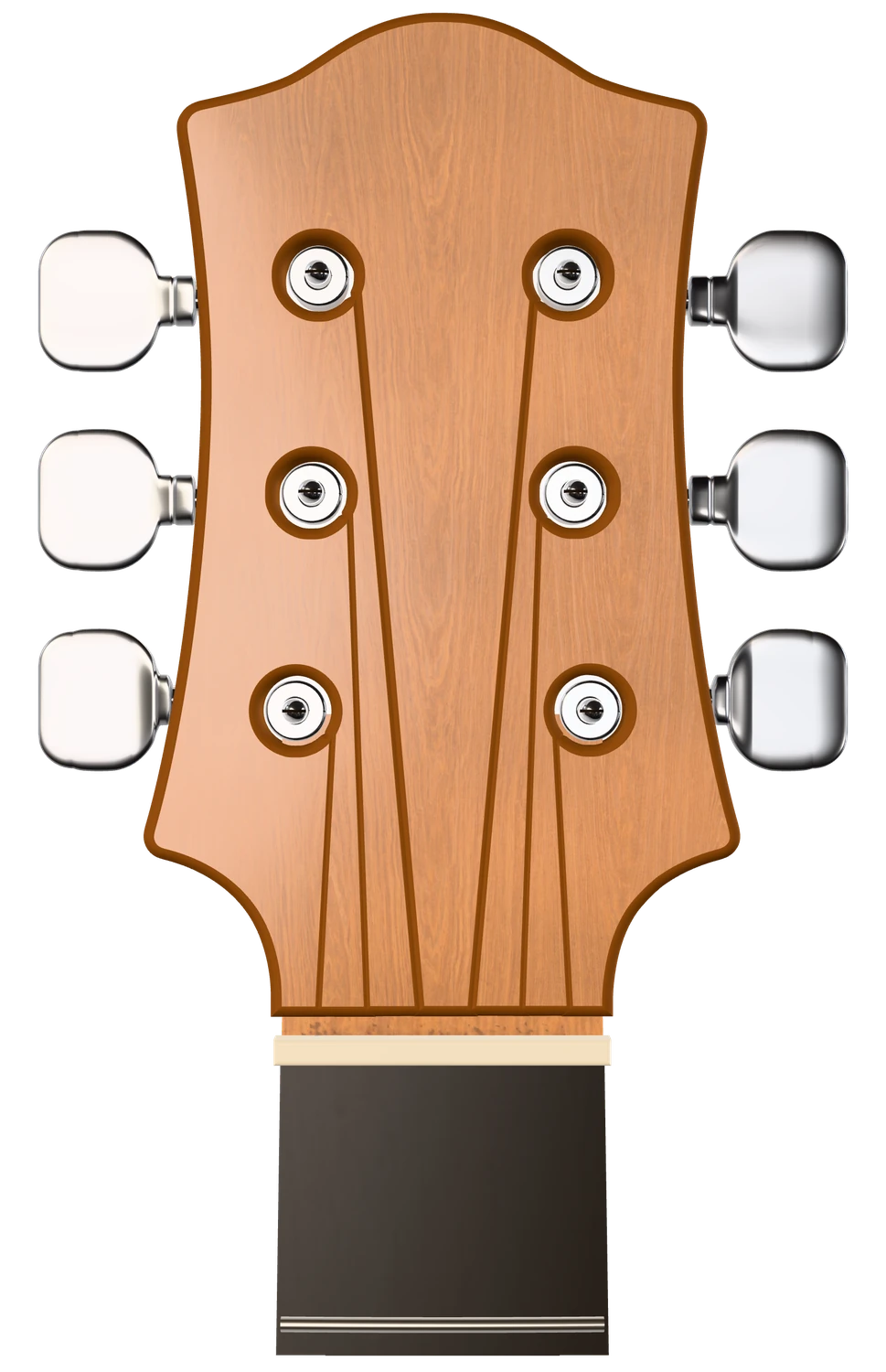










D2
The full tuner lives on your phone
Full step down lowers all six strings by two semitones. The shapes are the same as standard, but every note comes out a whole tone lower and the guitar sounds darker and heavier.
| String | Note | Frequency | From standard |
|---|---|---|---|
| String 6 · thickest | D2 | 73.42 Hz | Down a whole step, from E |
| String 5 | G2 | 98.00 Hz | Down a whole step, from A |
| String 4 | C3 | 130.81 Hz | Down a whole step, from D |
| String 3 | F3 | 174.61 Hz | Down a whole step, from G |
| String 2 | A3 | 220.00 Hz | Down a whole step, from B |
| String 1 · thinnest | D4 | 293.66 Hz | Down a whole step, from E |
Lowest string first, at A4 = 440 Hz. Highlighted strings differ from standard E–A–D–G–B–E.
From standard E–A–D–G–B–E. Turn in small steps and let each note ring before you read it.
Every string down a whole step: D–G–C–F–A–D, also called D standard.
Heavy rock, metal and grunge, for a lower, thicker sound without learning new chord shapes.
Singing a song a whole tone lower without relearning it in another key.
Wide, easy bends on heavy strings, a setup some blues players like.
Yes. Both mean D–G–C–F–A–D, standard tuning lowered a whole step.
Drop D changes one string and keeps the bright top end of standard. Full step down lowers everything, so the whole guitar sounds deeper, not just the bottom string.
Many players move up one or two gauges, for example from 10–46 to 11–50 or 12–54, so the strings don’t flop.
Yes. Full Step Down has its own page so you can tune to it free, with no sign-in. Switching between every tuning in one place, and the cents reading, come with Guitar Premium, the same Premium as the app.
Guitar TunerFree on iPhone and AndroidGet the app