 tuneit
Guitar essentials
Standard vs. Drop D tuning
What changes, what stays the same, and how to move between two useful six-string guitar tunings.

C♯–A♭–D♭–G♭–B♭–E♭ Free on this page. Allow the mic and play a string.
 Get the free appScan to download on your phone






C♯2
The full tuner lives on your phone
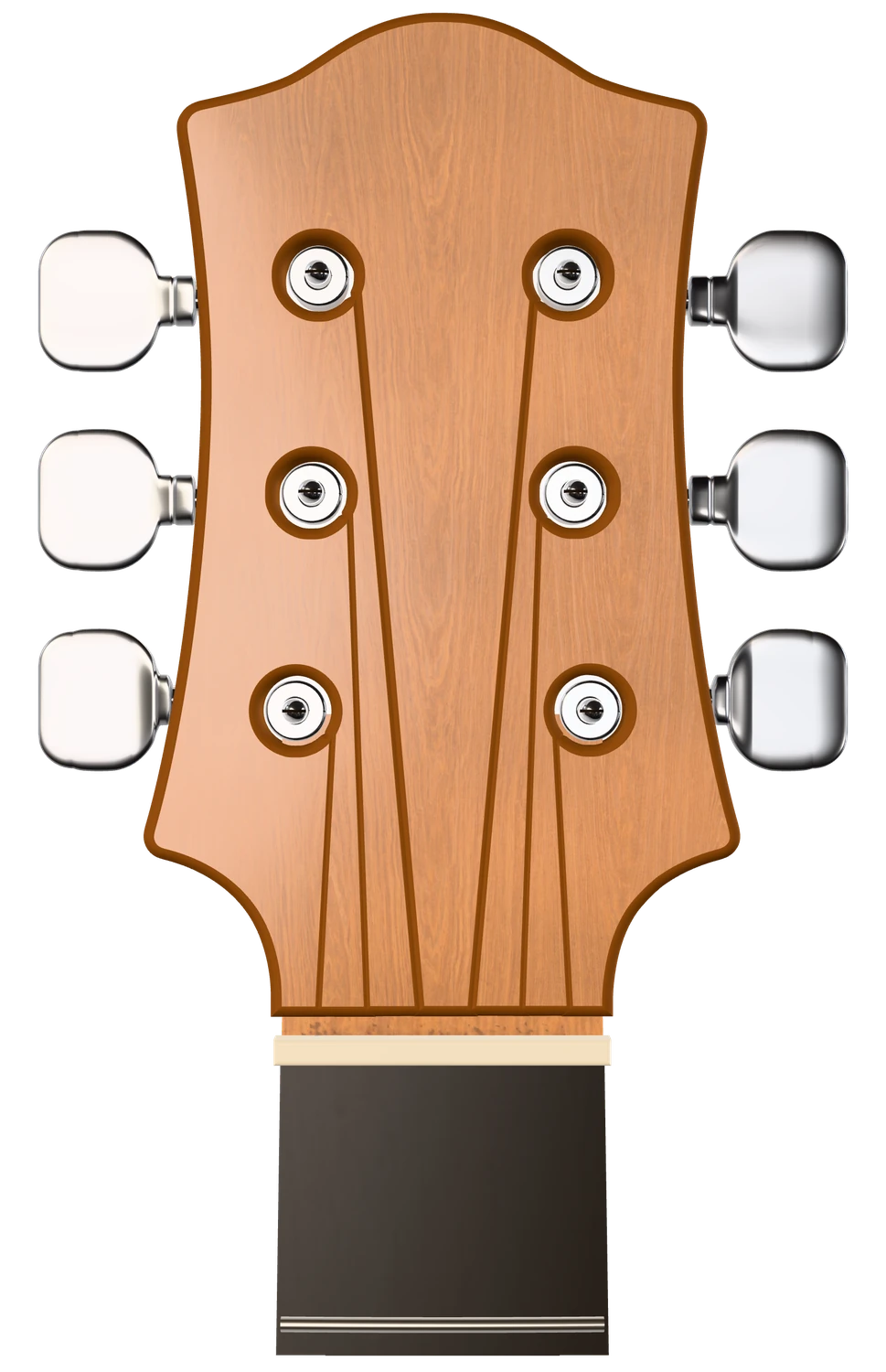
Drop C♯ is Drop D tuned down a half step. Every string comes down a semitone, and the 6th string comes down three, from E to C♯. One-finger power chords on the bottom three strings work just as in Drop D.
| String | Note | Frequency | From standard |
|---|---|---|---|
| String 6 · thickest | C♯2 | 69.30 Hz | Down three half steps, from E |
| String 5 | A♭2 | 103.83 Hz | Down a half step, from A |
| String 4 | D♭3 | 138.59 Hz | Down a half step, from D |
| String 3 | G♭3 | 185.00 Hz | Down a half step, from G |
| String 2 | B♭3 | 233.08 Hz | Down a half step, from B |
| String 1 · thinnest | E♭4 | 311.13 Hz | Down a half step, from E |
Lowest string first, at A4 = 440 Hz. Highlighted strings differ from standard E–A–D–G–B–E.
From standard E–A–D–G–B–E. Turn in small steps and let each note ring before you read it.
Drop D a half step lower: C♯–A♭–D♭–G♭–B♭–E♭.
Heavy rock and metal that want Drop D riffs with a darker, lower sound.
Bands that play in Drop D but tune everything down a half step for the singer.
It’s the same shape a half step lower. Every string is a semitone below its Drop D note.
Yes. C♯ and D♭ are the same pitch, so both names describe the same tuning.
Not to try it. For regular use, one or two gauges heavier keeps the low strings tight and in tune.
Yes. Drop C♯ has its own page so you can tune to it free, with no sign-in. Switching between every tuning in one place, and the cents reading, come with Guitar Premium, the same Premium as the app.
Guitar TunerFree on iPhone and AndroidGet the app