 tuneit.
Know the six notes before turning a peg
For a standard six-string guitar, the open strings are E–A–D–G–B–E, from the thickest string to the thinnest. The thickest is string 6; the thinnest is string 1. The two E strings share a name but sit two octaves apart. Start with this tuning unless your teacher or instrument instructions specify another setup.
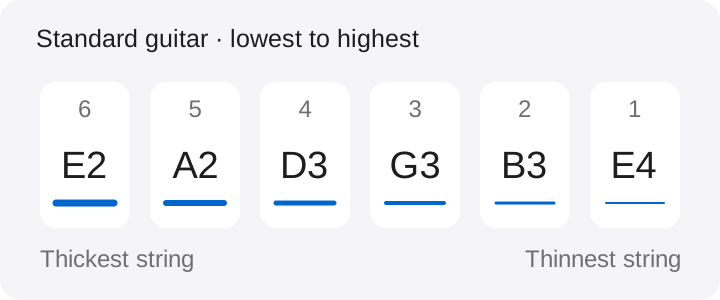
An open string is a string played without pressing it against a fret. Remove a capo for this first check, and place the guitar in its normal playing position. Follow each string up to its tuning peg so you know which peg belongs to it. Peg positions and winding directions differ, so do not assume every guitar turns the same way.
Give your tuner a clear sound
Choose standard guitar tuning on your tuner. If you are using a microphone app, allow microphone access and put the phone nearby with its microphone unobstructed. Pause background music and conversation. For an electric guitar, a clean, moderate amplifier sound can help a phone hear the note; avoid distortion and delay while checking.
Mute the other strings with your spare fingers, then pluck one open string gently. Wait for a stable reading. Repeated hard plucks can make the display jump and tempt you to adjust too quickly. Your first goal is a single clear note, not a meter that responds to every sound in the room.
Match the target note, then center the pitch
- Start with string 6 and its low-E target. Check that you are touching the correct peg.
- Read the note name first. A different note letter can mean the string is well away from its target; verify the intended register before making a large change.
- If the correct note is flat, raise its pitch slightly. If it is sharp, lower it slightly. Listen to confirm what a small turn does.
- Pluck again after each small adjustment, and stop when the pitch feedback is centered for the intended note.
- Repeat for A, D, G, B, and high E. Keep the unused strings quiet.
Stop if a string becomes unexpectedly tight, the peg is difficult to move, or the sound seems far higher than its target. A centered E reading is not enough if you have reached the wrong octave. Compare with a reliable reference or ask a teacher before continuing.
Recheck the whole guitar
Make a second pass across all six open strings. Adjusting string tension can slightly affect the rest, so the first string may need another small correction by the time you finish. Then play a familiar chord or a slow pattern. If something sounds wrong, return to the open notes instead of immediately changing every peg.
If the open strings agree with the tuner but chords still sound off, press the frets lightly enough to produce a clear note and try again. A recurring problem higher up the neck may need a setup or intonation check. Tuning the open strings and adjusting the instrument’s mechanics are different tasks.
Make tuning a quick habit
Check your guitar before each practice session, after changing strings, and when moving between noticeably different environments. As you get used to the sound and display, these small checks become much easier. Keep your target notes written down until their order feels familiar.
Standard tuning is a useful starting point, not the only option. Once you can identify each string confidently, explore alternate tunings with a specific set of target notes. Change deliberately and recheck the complete instrument whenever you switch back.