 tuneit
Guitar essentials
Standard vs. Drop D tuning
What changes, what stays the same, and how to move between two useful six-string guitar tunings.

B–F♯–B–F♯–B–D♯ Free on this page. Allow the mic and play a string.
 Get the free appScan to download on your phone
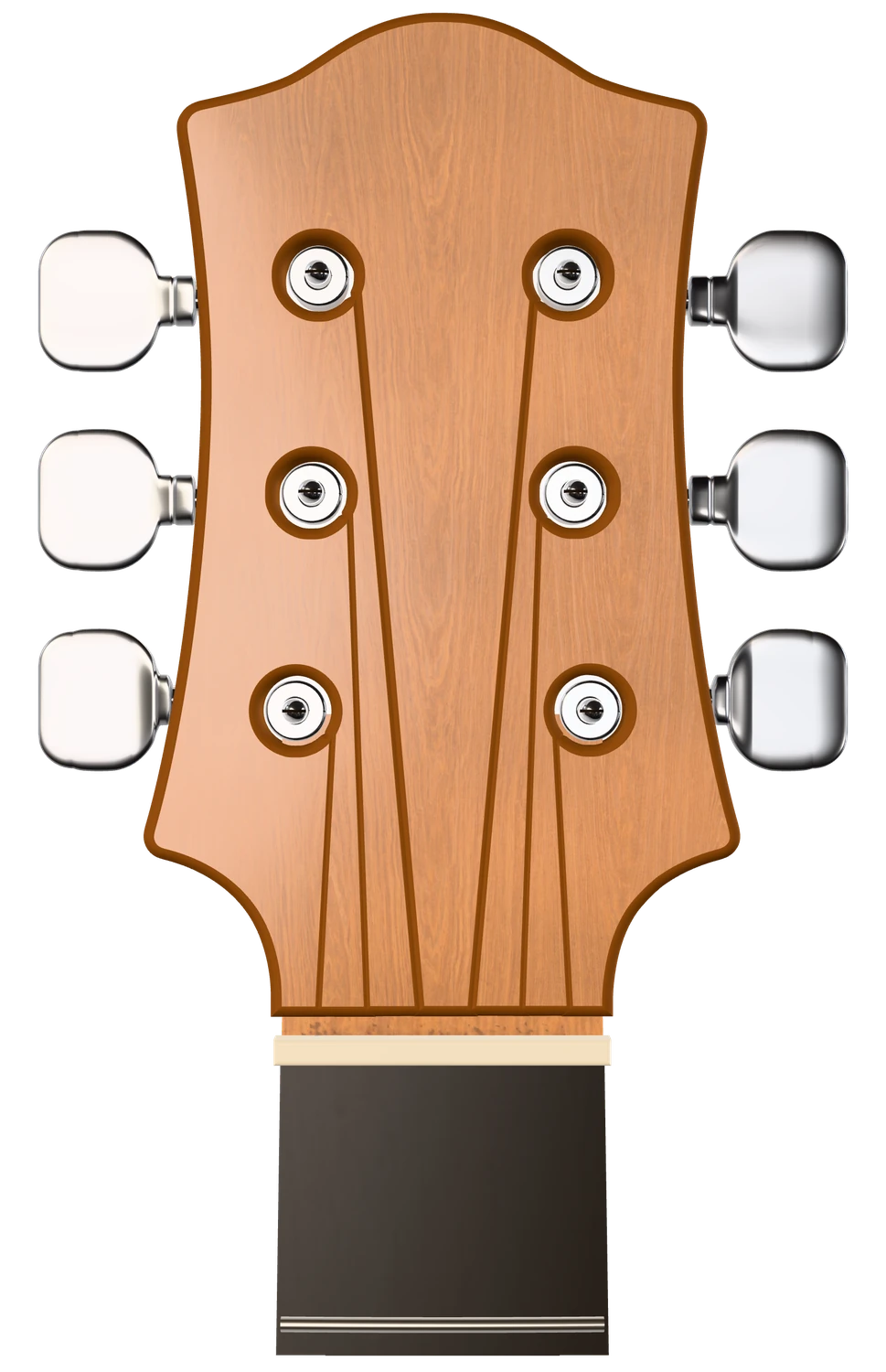










B1
The full tuner lives on your phone
Open B tunes the guitar down to a B major chord. The 6th string drops a fourth, from E to B, and four other strings come down a little, giving the same shape as Open C a half step lower.
| String | Note | Frequency | From standard |
|---|---|---|---|
| String 6 · thickest | B1 | 61.74 Hz | Down two and a half steps, from E |
| String 5 | F♯2 | 92.50 Hz | Down three half steps, from A |
| String 4 | B2 | 123.47 Hz | Down three half steps, from D |
| String 3 | F♯3 | 185.00 Hz | Down a half step, from G |
| String 2 | B3 | 246.94 Hz | Same |
| String 1 · thinnest | D♯4 | 311.13 Hz | Down a half step, from E |
Lowest string first, at A4 = 440 Hz. Highlighted strings differ from standard E–A–D–G–B–E.
From standard E–A–D–G–B–E. Turn in small steps and let each note ring before you read it.
A deep B major chord: B–F♯–B–F♯–B–D♯.
Heavy, low riffs and drones, especially on baritone guitars or guitars strung heavy for it.
Open C parts a half step lower. The shapes are identical: root, fifth, root, fifth, root, third.
It helps. On a standard guitar you’ll want a much heavier 6th string, because B1 is five half steps below E.
B1, at 61.74 Hz: the same note as the low string of a 7-string guitar.
It’s the same tuning a half step lower. Anything played in Open C works in Open B, sounding a semitone down.
Yes. Open B has its own page so you can tune to it free, with no sign-in. Switching between every tuning in one place, and the cents reading, come with Guitar Premium, the same Premium as the app.
Guitar TunerFree on iPhone and AndroidGet the app