 tuneit
Guitar essentials
Standard vs. Drop D tuning
What changes, what stays the same, and how to move between two useful six-string guitar tunings.

D–A–D–G–A–D Free on this page. Allow the mic and play a string.
 Get the free appScan to download on your phone
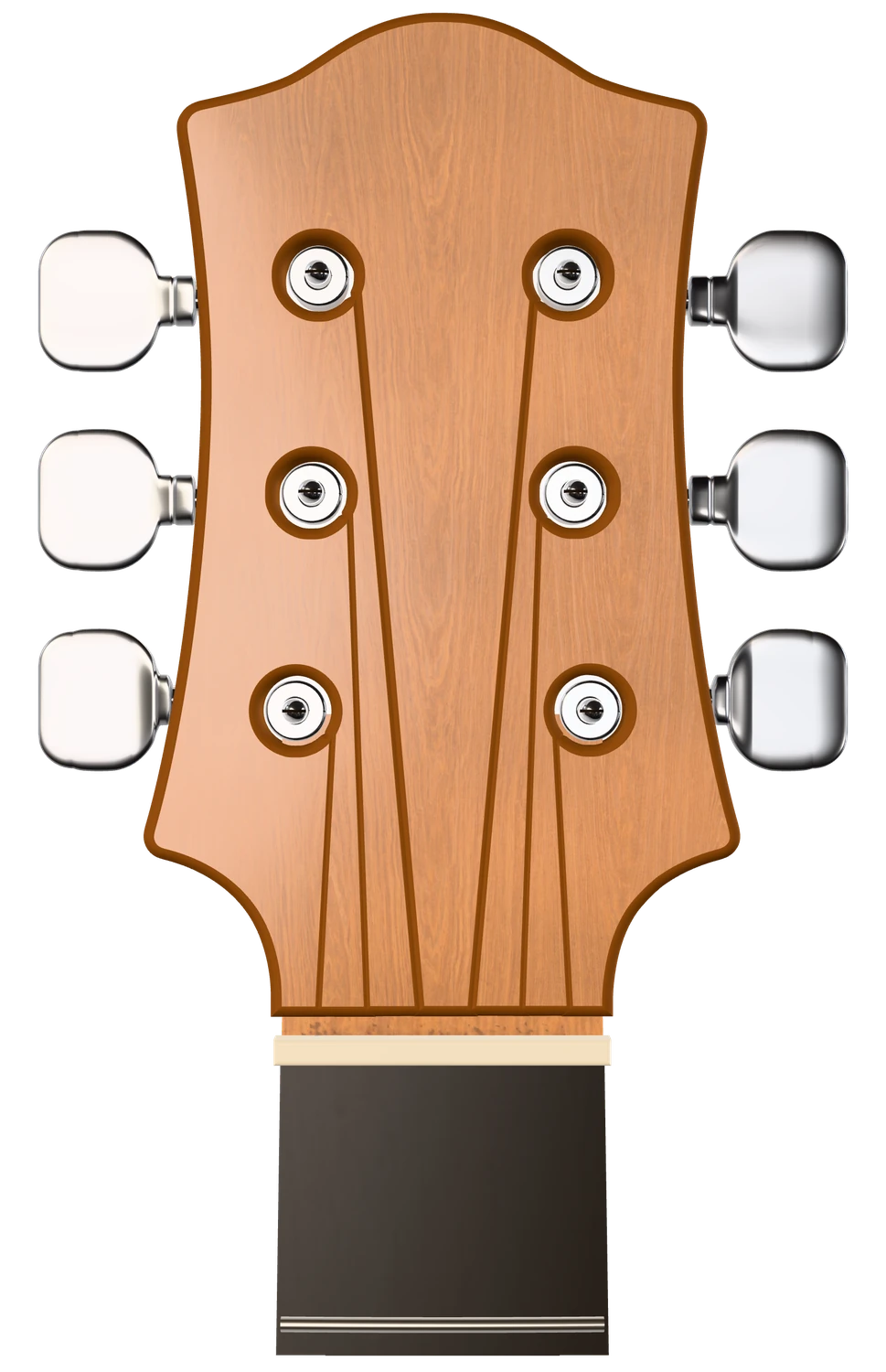






D2
The full tuner lives on your phone
DADGAD lowers three strings a whole step, the 6th, 2nd and 1st. The open strings make a Dsus4 chord, which has no third, so it sits between major and minor.
| String | Note | Frequency | From standard |
|---|---|---|---|
| String 6 · thickest | D2 | 73.42 Hz | Down a whole step, from E |
| String 5 | A2 | 110.00 Hz | Same |
| String 4 | D3 | 146.83 Hz | Same |
| String 3 | G3 | 196.00 Hz | Same |
| String 2 | A3 | 220.00 Hz | Down a whole step, from B |
| String 1 · thinnest | D4 | 293.66 Hz | Down a whole step, from E |
Lowest string first, at A4 = 440 Hz. Highlighted strings differ from standard E–A–D–G–B–E.
From standard E–A–D–G–B–E. Turn in small steps and let each note ring before you read it.
D–A–D–G–A–D: open, ringing, and neither major nor minor.
Celtic and British folk guitar, where it became a standard tuning from the 1960s on.
Led Zeppelin’s “Kashmir”, which Jimmy Page played in DADGAD.
Fingerstyle arrangements where open strings ring against fretted melody notes. Because there’s no third, the same shape fits both major and minor songs.
Dsus4: D, A and G. It has no third, so it’s neither major nor minor until you fret one.
Yes. It’s mostly heard on acoustic, but nothing about it is acoustic-only, and it sounds big with a little drive.
It’s friendly: lots of chords need only one or two fingers. But standard chord shapes don’t carry over, so it’s best once you know your way around standard.
Yes. DADGAD has its own page so you can tune to it free, with no sign-in. Switching between every tuning in one place, and the cents reading, come with Guitar Premium, the same Premium as the app.
Guitar TunerFree on iPhone and AndroidGet the app