 tuneit
Guitar essentials
Standard vs. Drop D tuning
What changes, what stays the same, and how to move between two useful six-string guitar tunings.

E–B–E–G♯–B–E Free on this page. Allow the mic and play a string.
 Get the free appScan to download on your phone
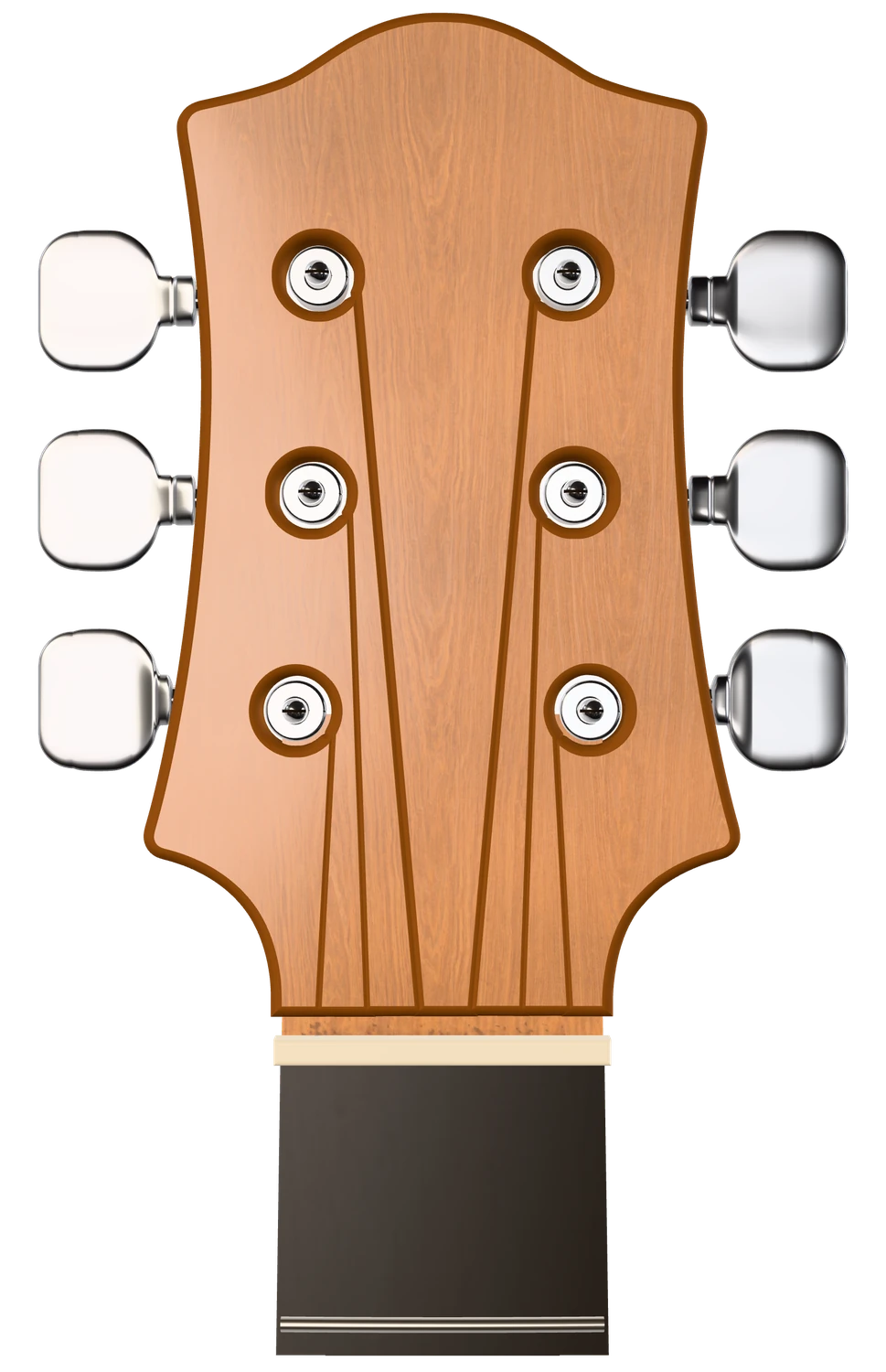






E2
The full tuner lives on your phone
Open E raises three strings instead of lowering them. The 5th and 4th strings go up a whole step and the 3rd up a half step, so the open guitar plays an E major chord.
| String | Note | Frequency | From standard |
|---|---|---|---|
| String 6 · thickest | E2 | 82.41 Hz | Same |
| String 5 | B2 | 123.47 Hz | Up a whole step, from A |
| String 4 | E3 | 164.81 Hz | Up a whole step, from D |
| String 3 | G♯3 | 207.65 Hz | Up a half step, from G |
| String 2 | B3 | 246.94 Hz | Same |
| String 1 · thinnest | E4 | 329.63 Hz | Same |
Lowest string first, at A4 = 440 Hz. Highlighted strings differ from standard E–A–D–G–B–E.
From standard E–A–D–G–B–E. Turn in small steps and let each note ring before you read it.
An open E major chord, tuned up: E–B–E–G♯–B–E.
Slide guitar. Duane Allman played slide in Open E, and Derek Trucks plays in it today.
Open D shapes a whole step higher. Anything learned in Open D works here, sounding two frets up.
Bright, high-tension slide parts, where the tighter strings keep the slide from clacking on the frets.
Not in normal use. It adds some tension, so on a guitar with heavy strings, or one you’re unsure of, use Open D with a capo at the 2nd fret.
The 5th (A to B), the 4th (D to E) and the 3rd (G to G♯). The two E strings and the B stay as they are.
They sound the same. Open E keeps the whole neck free; the capo keeps the tension down. Slide players often choose Open E so the strings stay tight under the slide.
Yes. Open E has its own page so you can tune to it free, with no sign-in. Switching between every tuning in one place, and the cents reading, come with Guitar Premium, the same Premium as the app.
Guitar TunerFree on iPhone and AndroidGet the app