 tuneit
Guitar essentials
Standard vs. Drop D tuning
What changes, what stays the same, and how to move between two useful six-string guitar tunings.

E–A–E–A–C♯–E Free on this page. Allow the mic and play a string.
 Get the free appScan to download on your phone
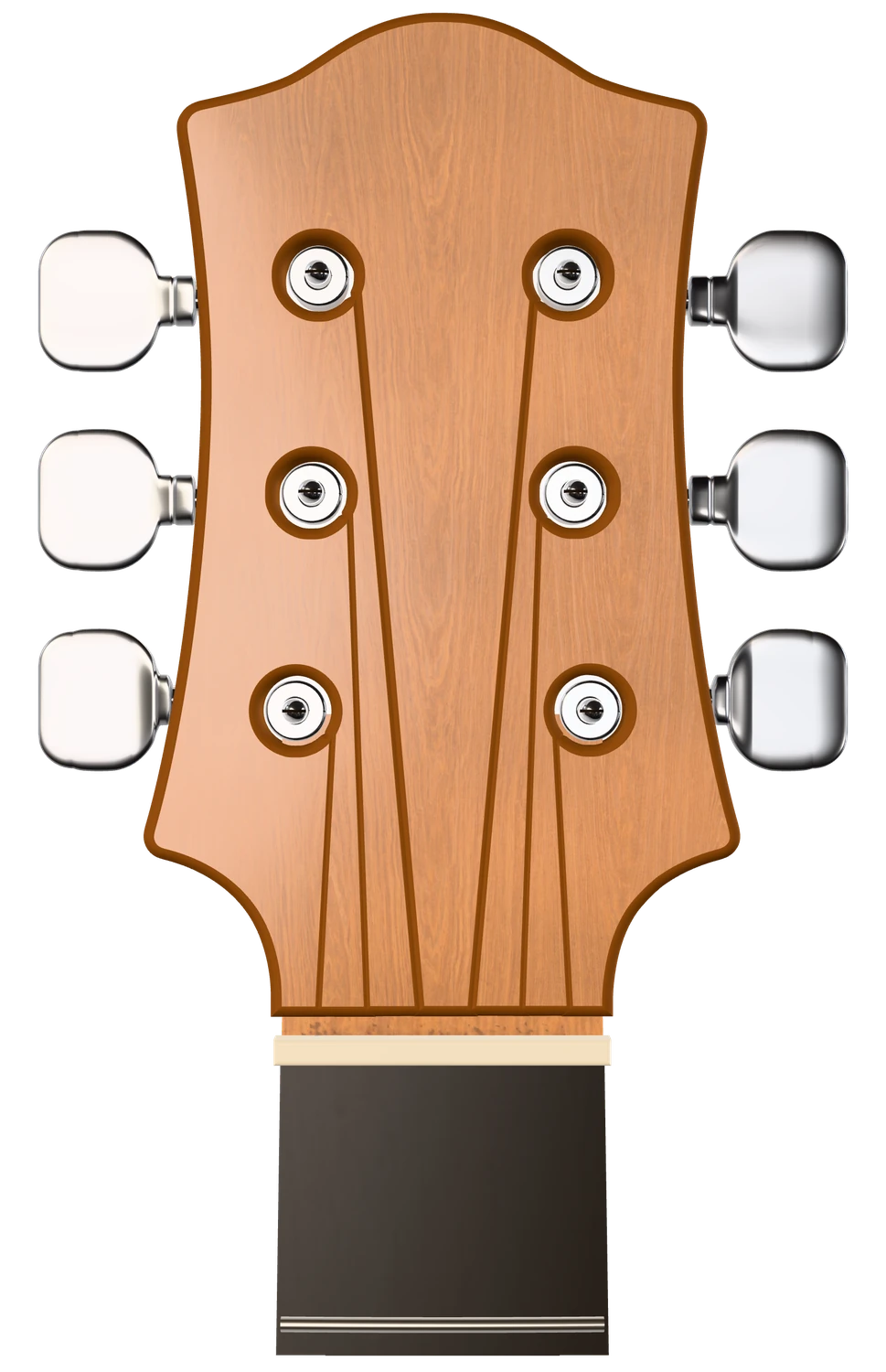






E2
The full tuner lives on your phone
Open A raises three strings a whole step, the 4th, 3rd and 2nd, so the open guitar plays an A major chord. The two E strings and the A string stay where they are.
| String | Note | Frequency | From standard |
|---|---|---|---|
| String 6 · thickest | E2 | 82.41 Hz | Same |
| String 5 | A2 | 110.00 Hz | Same |
| String 4 | E3 | 164.81 Hz | Up a whole step, from D |
| String 3 | A3 | 220.00 Hz | Up a whole step, from G |
| String 2 | C♯4 | 277.18 Hz | Up a whole step, from B |
| String 1 · thinnest | E4 | 329.63 Hz | Same |
Lowest string first, at A4 = 440 Hz. Highlighted strings differ from standard E–A–D–G–B–E.
From standard E–A–D–G–B–E. Turn in small steps and let each note ring before you read it.
An open A major chord: E–A–E–A–C♯–E.
Slide blues. Lay the slide across any fret for a major chord, with the root on the 5th string.
Open G shapes a whole step higher. Every Open G part works here two frets up, the same way Open G with a capo at the 2nd fret sounds.
The 4th (D to E), the 3rd (G to A) and the 2nd (B to C♯), each up a whole step.
They sound the same. The capo keeps the tension lower; Open A frees the whole neck for the slide.
For most guitars with normal strings, yes. With heavy strings or on a fragile old guitar, use Open G and a capo instead.
Yes. Open A has its own page so you can tune to it free, with no sign-in. Switching between every tuning in one place, and the cents reading, come with Guitar Premium, the same Premium as the app.
Guitar TunerFree on iPhone and AndroidGet the app