 tuneit
Ukulele essentials
High G vs. low G ukulele tuning
The same four note names, a different range. Understand the octave and choose a string setup that fits your ukulele.

G–D–G–B Free on this page. Allow the mic and play a string.
 Get the free appScan to download on your phone








G4
The full tuner lives on your phone
Open G keeps the high G and raises the other three strings: C to D, E to G and A to B. The open strings make a G major chord.
| String | Note | Frequency | From standard |
|---|---|---|---|
| String 4 | G4 | 392.00 Hz | Same |
| String 3 | D4 | 293.66 Hz | Up a whole step, from C |
| String 2 | G4 | 392.00 Hz | Up three half steps, from E |
| String 1 | B4 | 493.88 Hz | Up a whole step, from A |
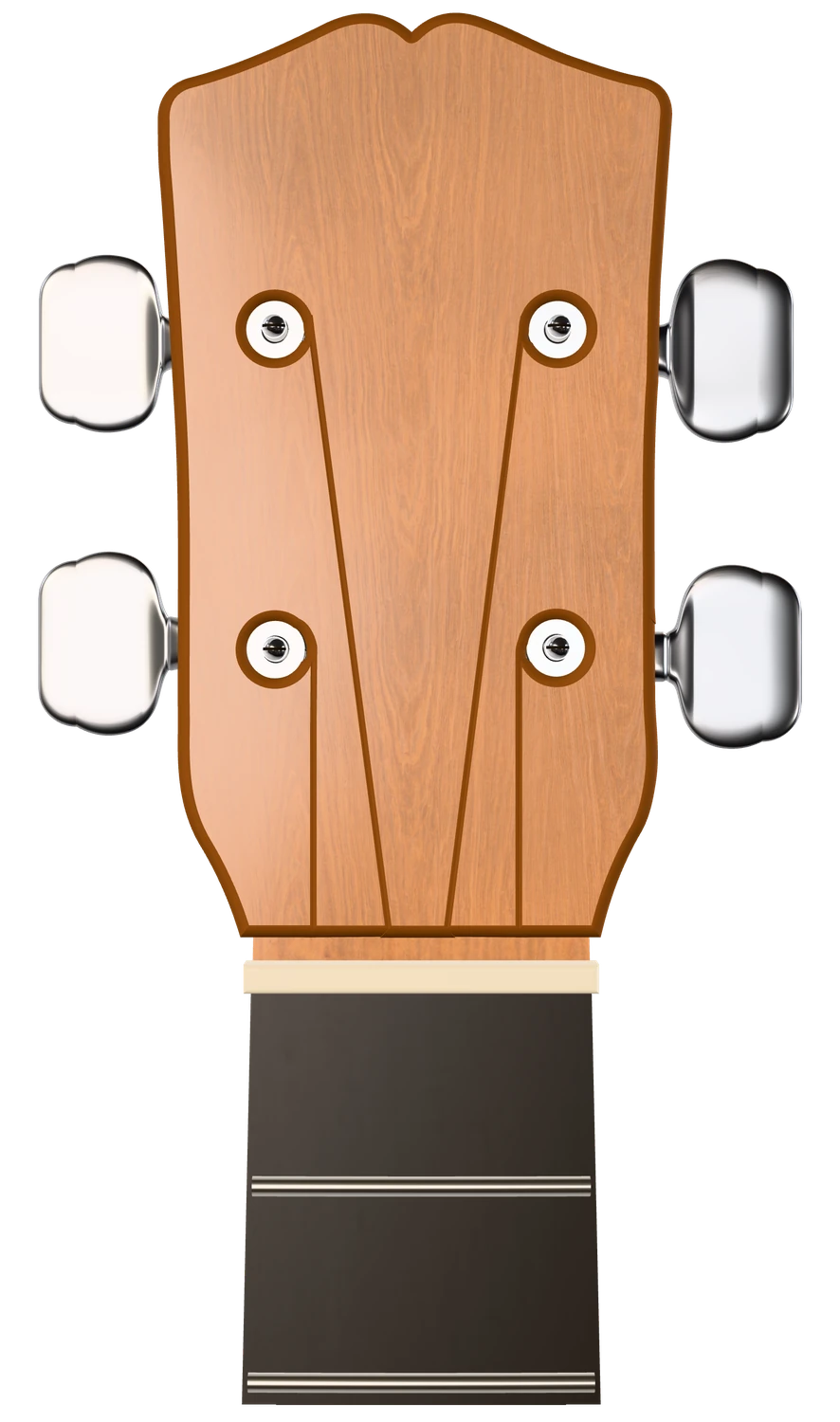
String 4 first, as you hold the ukulele, at A4 = 440 Hz. Highlighted strings differ from standard G–C–E–A.
From standard G–C–E–A. Turn in small steps and let each note ring before you read it.
G–D–G–B: an open G major chord on a high-G ukulele.
Slide and fingerstyle in G, with drones from the two G strings.
Borrowing guitar Open G ideas. A guitar in Open G has G–D–G–B on its 5th to 2nd strings, lower down.
The ukulele’s G–D–G–B matches the guitar’s 5th to 2nd strings, played higher. The guitar adds a low D on each side.
The E string, up three half steps to G. The C and A strings each go up a whole step.
Yes. With a low-G string the 4th string is G3 and the chord sounds fuller; the other strings are the same.
Yes. Open G has its own page so you can tune to it free, with no sign-in. Switching between every tuning in one place, and the cents reading, come with Ukulele Premium, the same Premium as the app.
Ukulele TunerFree on iPhone and AndroidGet the app