 tuneit
Ukulele essentials
High G vs. low G ukulele tuning
The same four note names, a different range. Understand the octave and choose a string setup that fits your ukulele.

G–C–E–A Free on this page. Allow the mic and play a string.
 Get the free appScan to download on your phone
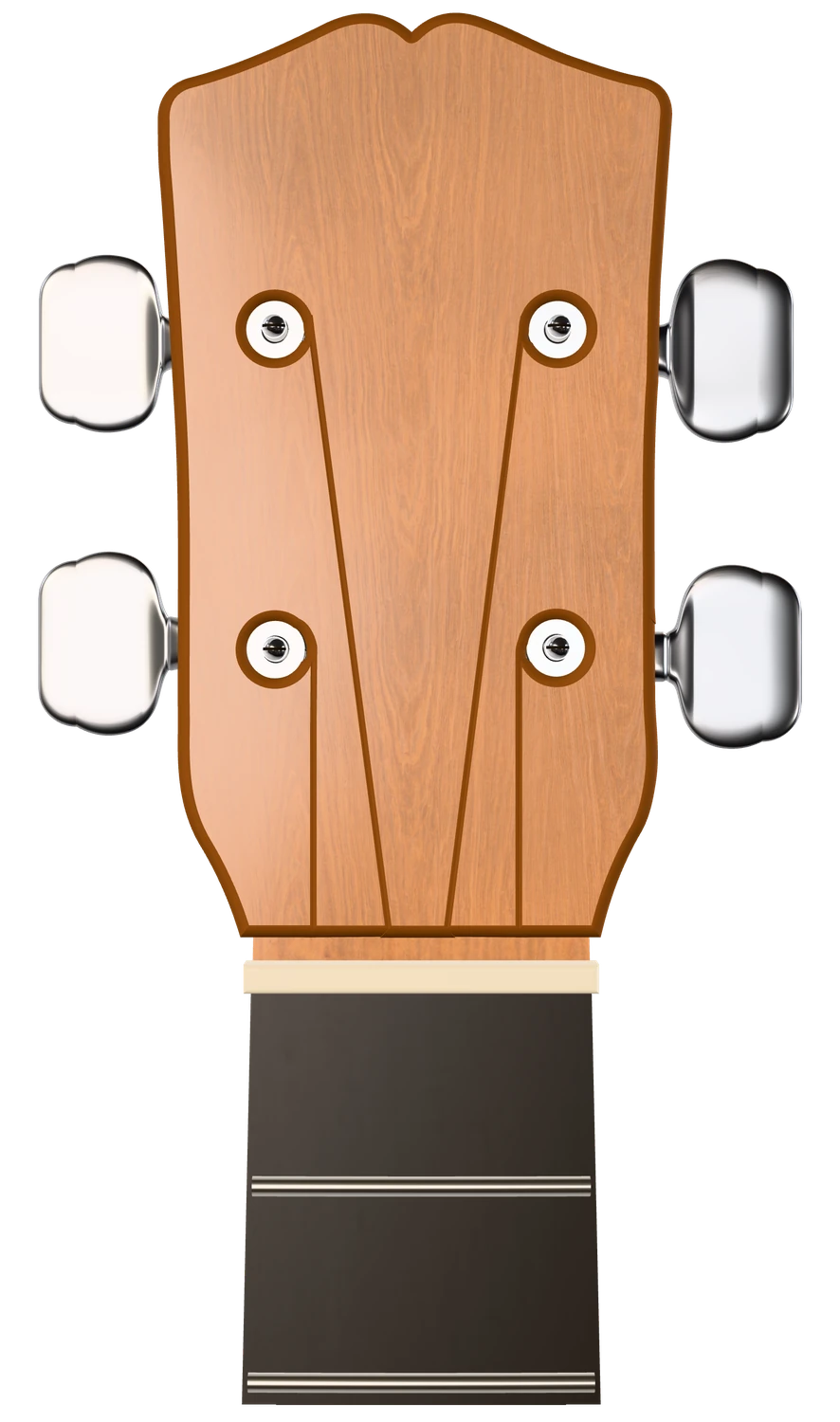





G3
The full tuner lives on your phone
Low G uses the same notes as standard ukulele tuning, but the 4th string is an octave lower, at G3. The strings then run from low to high like a guitar’s, instead of the high G of standard, re-entrant tuning.
| String | Note | Frequency | From standard |
|---|---|---|---|
| String 4 | G3 | 196.00 Hz | An octave down, on a low-G string |
| String 3 | C4 | 261.63 Hz | Same |
| String 2 | E4 | 329.63 Hz | Same |
| String 1 | A4 | 440.00 Hz | Same |
String 4 first, as you hold the ukulele, at A4 = 440 Hz. Highlighted strings differ from standard G–C–E–A.
From standard G–C–E–A. Turn in small steps and let each note ring before you read it.
G–C–E–A with the G an octave lower, for a fuller, deeper ukulele.
Fingerstyle and solo arrangements that need a real bass note under the melody.
Jazz and chord-melody playing, where the low G adds five notes below middle C.
Playing in a group, when the ukulele needs more low end to sit with other instruments.
No. An octave down leaves a high-G string far too loose to play. You need a string made for low G.
Either works. Most ukuleles ship with high G, and most songbooks assume it, so it’s the easier place to start.
No. Every shape stays the same; only the sound of the 4th string is lower.
Yes. Low G has its own page so you can tune to it free, with no sign-in. Switching between every tuning in one place, and the cents reading, come with Ukulele Premium, the same Premium as the app.
Ukulele TunerFree on iPhone and AndroidGet the app