 tuneit
Bass essentials
How to tune a 5-string bass
Start with B–E–A–D–G, get a steadier low B reading, and make your next tuning session easier.
B♭–E♭–A♭–D♭–G♭–B Free on this page. Allow the mic and play a string.
 Get the free appScan to download on your phone
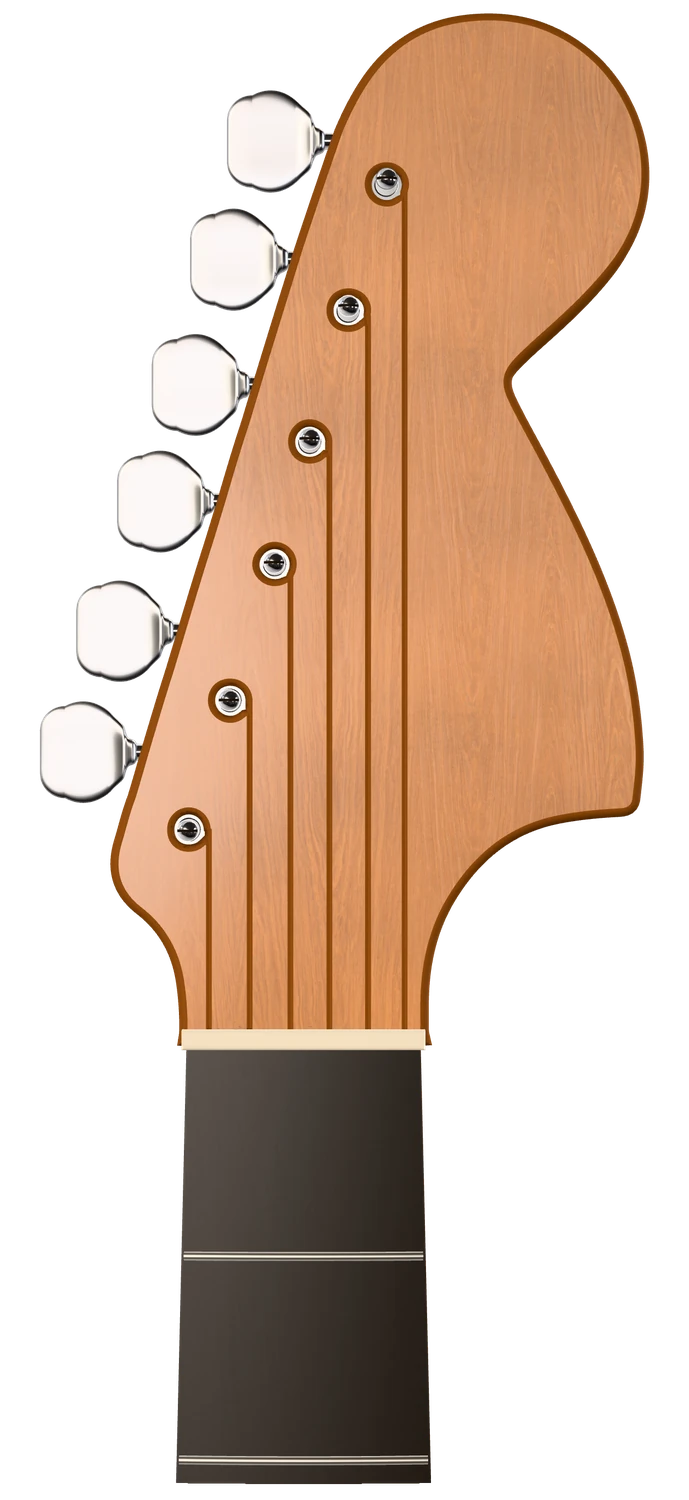












B♭0
The full tuner lives on your phone
Half step down lowers all six strings by a semitone, so the bottom B becomes B♭ and the top C becomes B: B♭–E♭–A♭–D♭–G♭–B. Shapes stay the same, and everything sounds a semitone lower.
| String | Note | Frequency | From standard |
|---|---|---|---|
| String 6 · thickest | B♭0 | 29.14 Hz | Down a half step, from B |
| String 5 | E♭1 | 38.89 Hz | Down a half step, from E |
| String 4 | A♭1 | 51.91 Hz | Down a half step, from A |
| String 3 | D♭2 | 69.30 Hz | Down a half step, from D |
| String 2 | G♭2 | 92.50 Hz | Down a half step, from G |
| String 1 · thinnest | B2 | 123.47 Hz | Down a half step, from C |
Lowest string first, at A4 = 440 Hz. Highlighted strings differ from standard B–E–A–D–G–C.
From standard B–E–A–D–G–C. Turn in small steps and let each note ring before you read it.
All six strings down a semitone: B♭–E♭–A♭–D♭–G♭–B.
Playing with a band in E♭ tuning while keeping both of the 6-string’s extra strings in their usual places.
Covering records made in E♭ without transposing, including chord and melody parts on the top strings.
They are the same pitch. C lowered a semitone is usually written B, and tuners show it as B.
Yes. The middle four strings are the usual E♭–A♭–D♭–G♭, with B♭ below them and B on top.
Yes. A semitone is a small change for every string, from the low B♭ (29.14 Hz) to the top B. If the low string feels loose, go one gauge heavier on it.
Yes. Half Step Down has its own page so you can tune to it free, with no sign-in. Switching between every tuning in one place, and the cents reading, come with 6 String Bass Premium, the same Premium as the app.
6 String Bass TunerFree on iPhone and AndroidGet the app