 tuneit.
Start by listening to the beat
A metronome provides a regular pulse. BPM means beats per minute: at 60 BPM, there are 60 beats in one minute. For this first exercise, let each click represent one quarter-note beat and count four beats per bar. You do not need to start at a song’s full performance speed.
Try 60 BPM as an example, then choose another tempo if it is easier to follow comfortably. Listen for a few bars without playing. Say “one, two, three, four” with the clicks, and keep the count repeating. Clapping or tapping a hand is enough for the first pass; remove difficult fingering from the task.
Play one small pattern
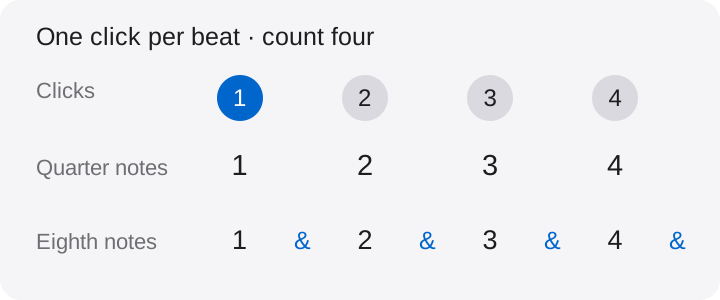
Choose one open string, a single keyboard note, or one chord you can already play comfortably. Sound it once on each click. Keep the movement relaxed. If you lose the count, pause and listen again rather than rushing several notes to catch up.
Once one sound per click feels steady, try two even sounds between consecutive clicks while counting “one-and, two-and, three-and, four-and.” The numbers line up with the clicks; the “and” falls halfway between them. Keep the tempo unchanged so the new challenge is subdivision rather than speed.
Try a five-minute practice session
| Time | Focus |
|---|---|
| Minute 1 | Listen, count four beats, and clap on each click. |
| Minute 2 | Play one comfortable sound per click. |
| Minute 3 | Repeat a short two- or four-bar pattern. |
| Minute 4 | Try even subdivisions, or repeat the simpler pattern. |
| Minute 5 | Play without the click, then bring it back and compare. |
This is a starting exercise, not a required daily schedule. Choose a passage short enough that you can notice what happens on each beat. Practicing a difficult page from beginning to end may hide the exact moment where your rhythm or coordination becomes uncertain.
Increase speed only after the pattern settles
Play the short pattern several times with clear notes and a consistent count. Then raise the tempo a small amount, such as a few BPM, and check again. If you repeatedly stumble at the same place, return to a slower tempo and isolate that moment rather than pushing through every repetition.
A lower setting is not automatically easier: long gaps between clicks can make keeping the pulse challenging. Choose a tempo that lets you hear and control the exercise. The aim is dependable rhythm and relaxed coordination. A larger number on the display is not a substitute for either.
Use the click as feedback
If the click seems to interrupt every note, listen before deciding you are early or late. Play a simple pattern and, if useful, record a short take with the metronome audible. Compare where your attacks fall. Work on one rhythmic change at a time instead of judging the whole performance as good or bad.
End by playing the passage without the metronome and keeping the same internal count. Bring the click back to check your pulse. You can use a standalone metronome or an app with a metronome; available controls and beat accents vary, so begin with the simplest settings.